
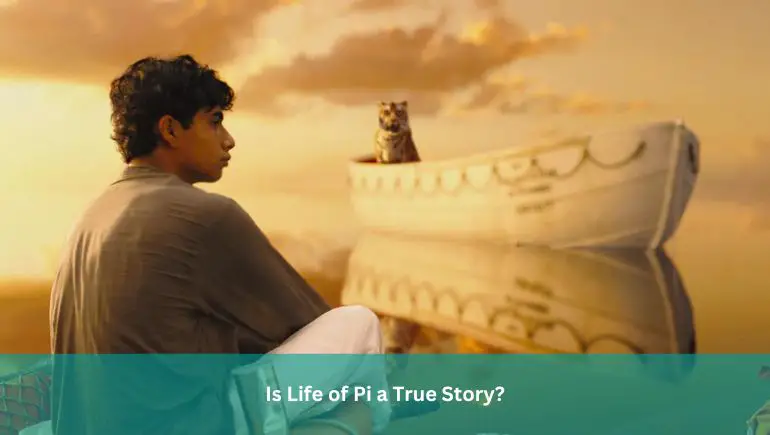

Short answer: No
No, Life of Pi is not a true story.
It is a work of fiction. The story was written by Canadian author Yann Martel and published in 2001.
The 2012 film is an adaptation of that novel. It is not a documentary, and it is not based on a real boy, a real ship, or a real tiger.
What the story is
The novel follows Piscine Molitor Patel, known as Pi.
Pi grows up in Pondicherry, India, in a family that runs a zoo. When his family tries to move to Canada, their ship sinks in the Pacific Ocean.
Pi survives on a lifeboat with several animals, including a Bengal tiger named Richard Parker. In the novel, Pi is at sea for 227 days.
That account is the story Martel invented. Pi Patel is a fictional character, not a real person. Richard Parker is a fictional tiger.
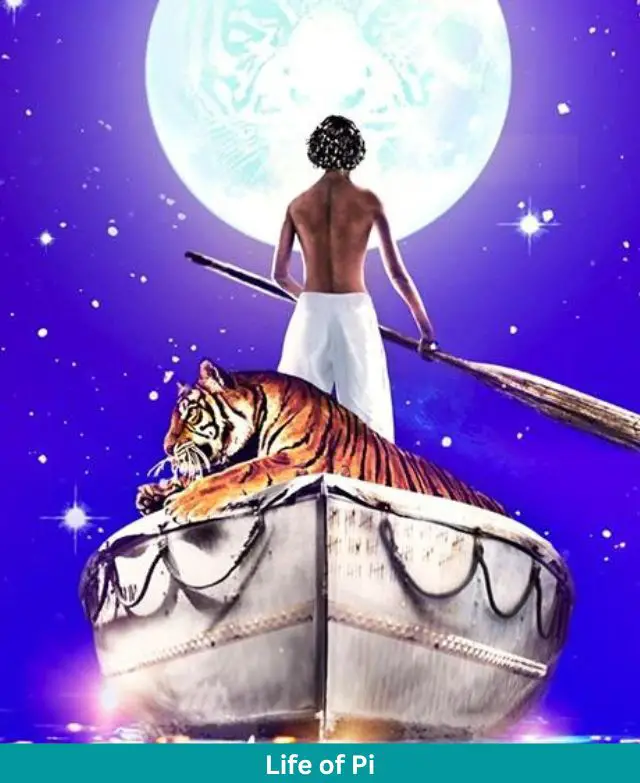
Photo Credit: TheFactsCity
Why the confusion happens
The novel plays with the idea of truth on purpose.
It opens with a framing device in which a writer hears Pi’s story. That device makes the tale feel personal, but it does not make it factual.
Near the end, Pi tells a second, plainer version of events to investigators. In that version, the animals are replaced by people.
The book invites readers to compare the two versions and ask which story they prefer. That choice is part of the fiction. The second version is not presented as a confirmed real account, and it should not be read as proof that the first version happened.
Some readers also mix Life of Pi up with real survival-at-sea stories. Real people have survived long periods adrift, but no verified account matches a boy sharing a lifeboat with a Bengal tiger for 227 days.
Where the idea came from
Martel has said he was partly inspired by a review of Max and the Cats by Brazilian author Moacyr Scliar.
That novella, published in 1981, features a young man stranded on a lifeboat with a jaguar. Martel turned that starting point into a different story, with an Indian boy and a Bengal tiger.
Inspiration is not the same as a true story. The premise sparked an idea. The characters, ship, and journey in Life of Pi remain invented.
Book and film facts
- Author: Yann Martel
- Novel published: 2001
- Novel award: Man Booker Prize for Fiction, 2002
- Film director: Ang Lee
- Film released: 2012
- Film screenplay: David Magee
- Young Pi in the film: Suraj Sharma
- Adult Pi in the film: Irrfan Khan
The film won four Academy Awards, including Best Director for Ang Lee. Its other wins were Best Cinematography, Best Visual Effects, and Best Original Score.
The tiger in the film was created with visual effects. It was not a real tiger travelling with an actor on a lifeboat.
What the story is about
At its core, Life of Pi is about survival, faith, and storytelling.
Pi draws on Hinduism, Christianity, and Islam in the novel. The book asks how stories help people make sense of hardship.
It also asks a simpler question: when two stories are offered, does the more beautiful or meaningful story matter more than the more ordinary one? The novel leaves that question open for the reader.
Quick facts
| Question | Answer |
|---|---|
| Is Life of Pi a true story? | No, it is fiction |
| Who wrote it? | Yann Martel |
| When was the novel published? | 2001 |
| Who directed the film? | Ang Lee |
| When was the film released? | 2012 |
| Is Pi Patel a real person? | No, he is a fictional character |
| Is Richard Parker a real tiger? | No, he is a fictional tiger |
Frequently asked questions
Is Life of Pi based on a true story?
No. It is based on Yann Martel’s novel, which is fiction. Real survival stories may feel similar, but they are not the same story.
Was Pi Patel a real person?
No. Pi Patel was created for the novel. There is no verified real Pi Patel who survived the journey described in the book.
Was the tiger real?
No. Richard Parker is fictional. In the film, the tiger was brought to life with visual effects, not by placing a real tiger on a lifeboat with the cast.
Which story is true in Life of Pi?
Neither version is a confirmed factual record. Both are part of Martel’s novel. The book presents the animal story first, then a human version, and leaves readers to decide which story they find more compelling.
Did Yann Martel meet a real Pi Patel?
No reliable account supports that as fact. The author’s note and framing in the novel are literary devices, not evidence that the main story happened.


